Menstrual Cycle 101 – For Women Over 40!
Before We Can Understand Perimenopause We Need To Understand Our Menstrual Cycles.
And that means going back a bit and finally learning the basics. Because, once we know what our menstrual cycles have been doing these past 30+ years, we can better understand the craziness we are feeling now in our 40s+.
I once asked a group of pre-teen girls why they thought we had periods as women, and they all said, “To have babies someday”. I get the same response from most 40+ women, too. And although there is truth to that – our menstrual cycles do thicken our lining for implantation, release an egg, and produce hormones needed for new life, that isn’t the ONLY thing our cycles do.
The hormones made during a menstrual cycle are used by almost every cell in the body. They help us feel good, look good, and keep us strong and healthy in our reproductive years.
So, let’s get the cycle education we should have got in 5th grade (and probably another refresher in high school) and finally understand what’s been going on with our bodies all these years.
The four phases
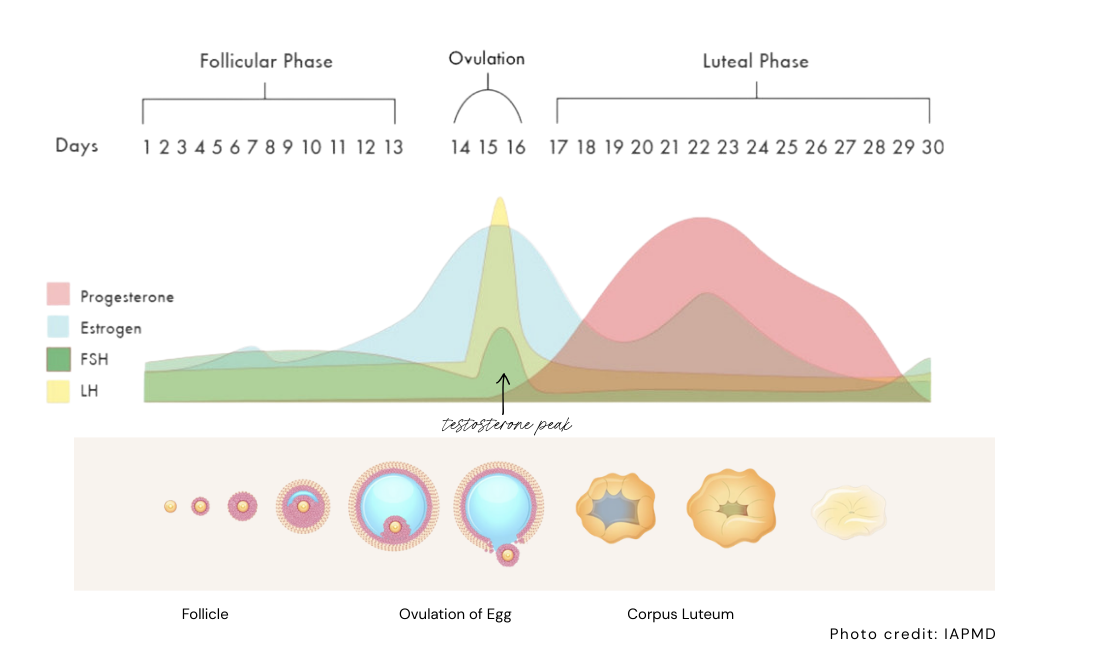
Our menstrual cycle has 4 phases. The menstrual phase, follicular phase, ovulatory phase, and luteal phase.
The menstrual phase is the ending of one cycle and beginning of the next. Day 1 of your cycle is the first day of bleeding. We bleed to shed the uterine lining we built up the cycle prior after pregnancy doesn’t occur. The brain knows that pregnancy did not occur, all the hormones we made in that cycle drop, and this triggers the release of the lining and a new cycle to start. The menstrual phase (aka your period) lasts from 3-7 days.
The brain is also starting to send out a hormone called FSH (follicle stimulating hormone) in order to stimulate follicles in a new cycle. This hormone stimulates a new cohort of follicles in the ovaries to grow into the next possible egg to be ovulated. A handful will start to grow each cycle, but only one egg is selected to be ovulated.
As these follicles grow they start to make estrogen and we start to get our first wave of hormones again. I find it funny that we are told we are “hormonal” and even might feel and call ourselves “hormonal” right before and for the first couple days of our period, but this is actually the time when we have the LEAST amount of hormones circulating. Does that surprise you, too?
We eventually get a nice peak of estrogen from the follicles and the brain knows that there is an egg ready to be ovulated. In response to this rise in estrogen, the brain releases another hormone, LH (luteinizing hormone) to tell the follicle to ovulate that egg. This is also where we get our peak in testosterone as women. A handy way to boost our libido right when we need it to.
We now enter the ovulatory phase. This is the shortest phase of the cycle, but because ovulation is the star of the menstrual cycle show, it gets it own phase.
LH rises and the follicle ovulates the egg, bursting it from the ovary to be swept into the fallopian tubes. Then the magic begins.
We enter the luteal phase. The follicle that is left behind becomes a temporary hormone producing gland called the corpus luteum and produces progesterone. This is the only way we get meaningful levels of this important hormone. The corpus luteum only lives about 14 days, giving us a nice surge of progesterone before starting to degrade. As the corpus luteum goes away it stops producing progesterone. Progesterone is a calming hormone, so in the first part of the luteal phase we feel really good! BUT, as we lose progesterone and estrogen as the cycle comes to an end, we start to feel that loss and start to feel more of the PMS type symptoms.
As the luteal phase comes to an end, the brain picks up on the low levels of hormones and knows that a cycle has completed. It starts making FSH, it sends out the messages needed to start shedding the uterine lining and we start our period.
The next blog, “Why Perimenopause Feels Like Chaos” will explain why perimenopause can be a bumpy ride and how to make it make sense, but we get our first big clue here, looking at the menstrual cycle.
Ovulation and healthy menstrual cycles provide hormones that make us feel good. It is why we start to feel alive again when our period stops and why we feel so content and confident the week we ovulate. Because the hormones help us feel good. It is also why the week leading up to our period we feel like a moody, rage-y, bloated, overstimulated wreck – because we don’t have those hormones on board. They are all low. Low hormones = symptoms.
Menopause is the eventual stopping of our cycles and a permanent low hormone state. In perimenopause our hormone levels are a bit all over the place and imbalanced with each other, and sometimes we feel every bit of this as symptoms that feel like we are living in a new body.
Over the next series of blogs I will be explaining all things hormones and perimenopause, how to support your body, and how to help you go from rage-y and wrecked to balanced and back in control. This is my Perimenopause Roadmap series and I hope you’ll stick around.
If you want to dive in now and start to dig into supporting your health through this transition, check out my full Perimenopause Roadmap Guide.
It goes deeper into all the information I share here and gives you a focus each month to support your health best in midlife.
Click below to purchase the Roadmap now!